

Bone Marrow for Babies: Separating Fact from Fiction
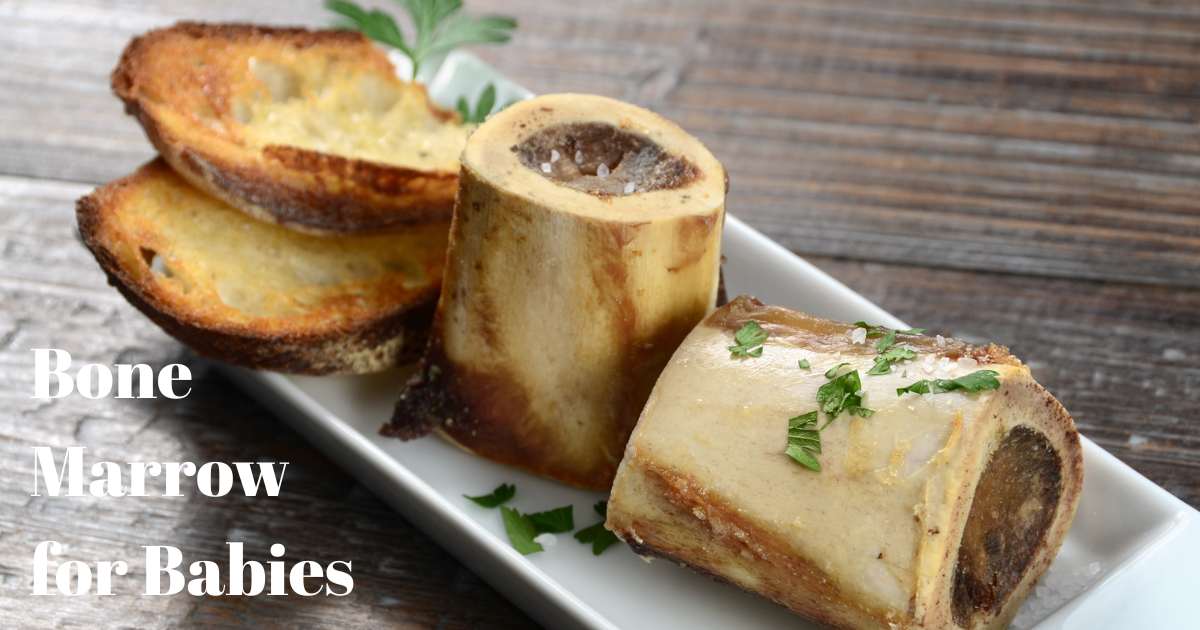
Bone marrow has become increasingly popular on social media as a “superfood” for babies. At our well-baby clinic we often meet parents who have seen this trend. One of the most common questions is whether babies should actually eat it, and if so, how much is appropriate. Many have started giving it already and are not too concerned about introducing a bigger variety of foods as they feel that this provides excellent nutrition in itself.
While it is a nutrient-rich traditional food enjoyed in many cultures, it is important to separate evidence-based facts from exaggerated health claims.
What is bone marrow?
Bone marrow is the soft, fatty tissue found inside the bones of animals such as beef, lamb, and venison. The edible marrow is rich in fats and contains small amounts of vitamins and minerals.
It should not be confused with bone broth, which is made by simmering bones in water.
In South Africa, marrow bones are readily available from most butchers and are often an affordable way to add variety to family meals.
At what age can babies have bone marrow?
Bone marrow can be introduced from around 6 months of age, once a baby is developmentally ready for complementary feeding and has started solids.
It should always be offered:
- Fully cooked – Roast at approximately 220°C (425°F) for 15–20 minutes until the marrow is soft, scoop from the bone and mash it till soft
- In very small amounts initially
- Alongside a variety of other nutrient-rich foods
For younger babies, the marrow can be mashed into pureed vegetables or mixed into minced meat.
Older babies (around 8–9 months and beyond) may enjoy marrow spread thinly on toast fingers or stirred into mashed vegetables.
What are the advantages of bone marrow for your baby?
Bone marrow contains several nutrients that are important during infancy.
- Healthy fats
Bone marrow is predominantly fat, which his essential for brain and nervous system development , cell growth and the absorption of fat-soluble vitamins (A, D, E and K)
Infants require a relatively high-fat diet during the first two years of life.
- Energy
Because it is calorie-dense, bone marrow provides concentrated energy, which can be helpful for babies with smaller appetites.
- Vitamin A
Bone marrow contains small amounts of vitamin A. This supports baby’s vision and immune function. Bone marrow is not one of the richest dietary sources of Vitamin A, compared for example with liver.
- Iron
Bone marrow contains some iron, but not nearly as much as many people believe. And this is important, because iron plays a crucial role in your baby’s health.
Better iron sources include beef, lamb, chicken, liver (only in small amounts due to very high vitamin A), beans, lentils and iron-fortified cereals
Parents should not rely on bone marrow to meet an infant’s iron requirements.
- Other nutrients
Bone marrow also provides modest amounts of Vitamin B12, Phosphorus, Zinc and Selenium
Once again, these nutrients are generally found in much higher amounts in muscle meat and other foods.
Can babies suck marrow directly from the bone?
Many social media videos show babies chewing on marrow bones. However, most paediatric feeding experts do not recommend this because of the potential risks of choking, bone fragments breaking off, and hard bone causing and of tooth and gum injury.
It is safer to remove the cooked marrow from the bone before serving.
Can you give too much bone marrow?
Yes. Although bone marrow can be a nutritious food, it is possible for babies and young children to have too much of it, particularly if it is offered frequently or in large amounts.
- It’s very high in fat
Bone marrow is made up predominantly of fat. If bone marrow is eaten in large quantities, it canf ill a baby up quickly, leaving less room for other nutrient-rich foods.
- It is not a complete food
Despite its reputation, bone marrow is not a significant source of many nutrients babies need, including iron. Babies from around 6 months require regular iron-rich foods because their iron stores from birth begin to decline. Muscle meats, poultry, fish, eggs, legumes, and iron-fortified cereals remain important components of a balanced diet.
- Digestive tolerance
Because of its rich fat content, some babies may experience loose stools and mild digestive upset
How much is reasonable?
There are no official guidelines recommending a specific serving size or frequency for bone marrow in infants or children. A practical approach is to think of it as an occasional addition to meals rather than a daily food. A teaspoon (or half-teaspoon for smaller babies) into vegetables, mashed potato, or minced meat is generally more than sufficient for a baby.
So is bone marrow a “superfood”?
This depends on how “superfood” is defined. Bone marrow is definitely nutrient dense with healthy fats and energy. It is also traditionally a ‘whole food’ or ‘real food’.
However, there is no scientific definition of a superfood, and there is no evidence that bone marrow alone improves immunity, intelligence, gut health, or development.
It is best viewed as one nutritious food among many, rather than a nutritional necessity.
Let’s look at all the online claims?
Many online claims suggest bone marrow:
- Heals the gut
- Strengthens immunity
- Reduces inflammation
- Supports brain development
- Improves allergies
There are currently no high-quality clinical trials showing that babies who eat bone marrow have better growth, improved immunity, stronger bones, or superior brain development compared with babies consuming other nutrient-rich complementary foods.
Some compounds found in marrow, including lipids and growth factors, have shown biological activity in laboratory or animal studies, but this does not prove the same effects occur when people eat cooked bone marrow.
Anthropological research shows that hunter-gatherer populations often prized marrow as an energy-rich food, especially during times when calories were scarce. This demonstrates historical use but does not establish unique health benefits.
Parents should therefore be cautious about marketing claims that go beyond the available evidence.
Key Take-Home Message for Parents
Bone marrow can be a nutritious addition to a baby’s diet from around 6 months, provided it is fully cooked, served safely, and offered as part of a balanced diet. It provides healthy fats and energy, but it should not be considered a substitute for iron-rich foods or a cure-all for health concerns. While bone marrow has a long history in traditional diets, current scientific evidence does not support many of the sweeping health claims made on social media. The best approach remains a varied diet that includes a range of nutrient-dense foods to support healthy growth and development.
Feel like reading some more?
WHO Guideline: Complementary Feeding of Infants and Young Children (2023)
Provides evidence-based recommendations on introducing complementary foods from around 6 months of age.
https://www.who.int/publications/i/item/9789240081864
American Academy of Pediatrics (HealthyChildren.org), Starting Solid Foods
Practical guidance on introducing complementary foods, including iron-rich foods.
ESPGHAN (European Society for Paediatric Gastroenterology, Hepatology and Nutrition)
Complementary Feeding: A Position Paper by the ESPGHAN Committee on Nutrition
https://pubmed.ncbi.nlm.nih.gov/28027215/
Nutrient Composition of Bone Marrow, USDA FoodData Central
Searchable database for the nutritional composition of beef bone marrow and thousands of other foods.
(Search for “beef marrow”)
Food Standards Australia New Zealand (Food Composition Database)
https://www.foodstandards.gov.au/science-data/monitoringnutrients/afcd
(Search for marrow or related meat products.)
Iron Requirements for Infants, National Institutes of Health (NIH), Iron Fact Sheet for Health Professionals
https://ods.od.nih.gov/factsheets/Iron-HealthProfessional/
Research on Traditional Diets & Marrow Consumption, Cordain L, et al, Plant-animal subsistence ratios and macronutrient energy estimations in worldwide hunter-gatherer diets
https://academic.oup.com/ajcn/article/71/3/682/4729121
This paper discusses the importance of animal foods (including fatty tissues like marrow) in traditional diets, although it does not study babies specifically.